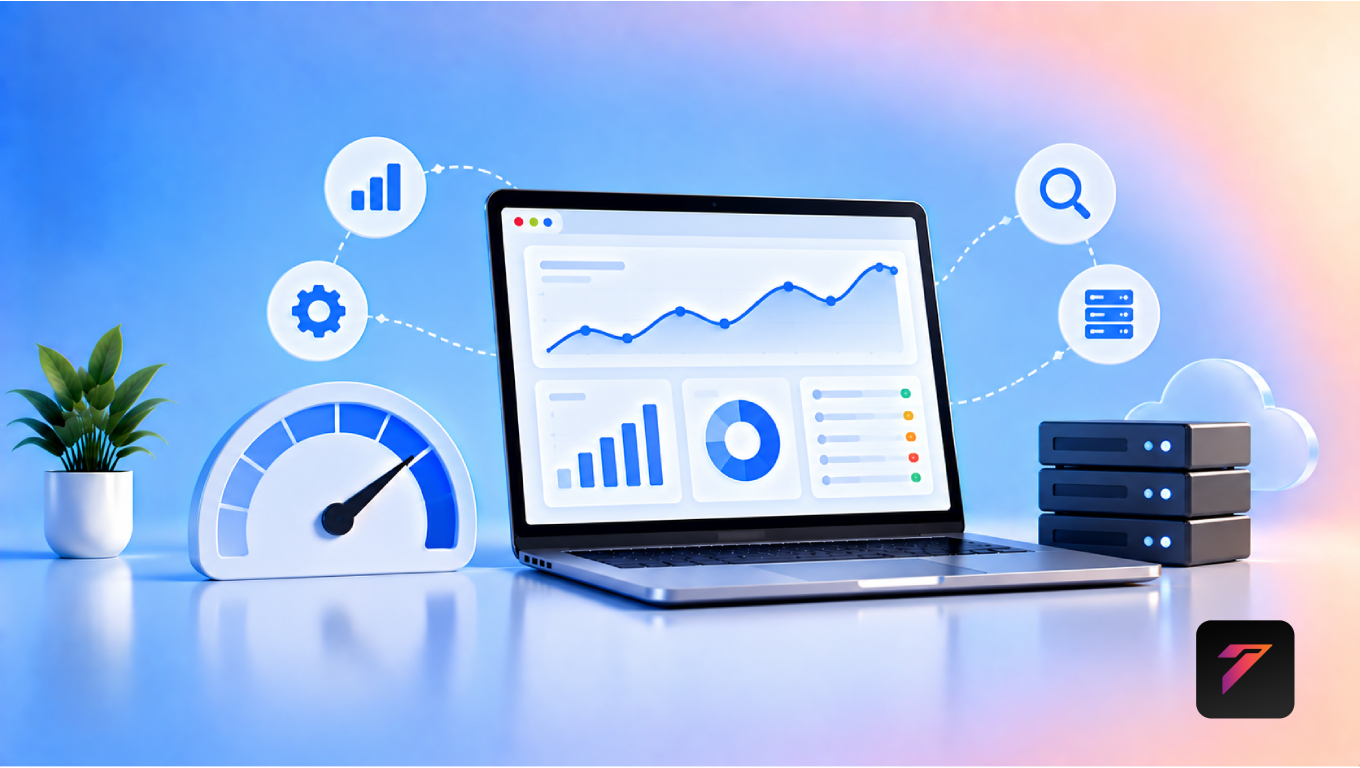
Understanding website analytics for business is essential for companies that want to make smarter decisions, improve customer experiences, and achieve sustainable growth. Every visitor who lands on your website leaves behind valuable information about their behavior, interests, and interactions. When businesses analyze this data correctly, they can identify opportunities, solve problems, and make decisions based on facts rather than assumptions.
Many businesses invest in websites, SEO, digital marketing, and advertising but fail to measure their performance effectively. Without website analytics, it’s difficult to know which marketing campaigns generate leads, which pages convert visitors into customers, or why potential customers leave without taking action.
Website analytics provides insights into visitor demographics, traffic sources, user behavior, conversions, and overall website performance. These insights help businesses optimize marketing strategies, improve website design, increase conversions, and maximize return on investment (ROI).
In this comprehensive guide, we’ll explore how website analytics for business supports better decision-making, the key metrics every business should monitor, the best analytics tools available, and practical strategies for turning website data into measurable business growth.
What Is Website Analytics for Business?
Website analytics for business is the process of collecting, measuring, analyzing, and interpreting data about website visitors and their interactions.
Rather than guessing what customers want, businesses can use analytics to understand:
- Who visits the website
- Where visitors come from
- Which pages they view
- How long they stay
- What actions they take
- Where they leave
- Which marketing campaigns perform best
- How visitors become customers
Website analytics transforms raw website data into meaningful business insights.
Why Website Analytics Matters
Every business decision becomes stronger when it’s supported by accurate data.
Without website analytics, businesses often rely on assumptions.
Website analytics helps answer questions like:
- Which marketing channel generates the most leads?
- Which pages receive the highest traffic?
- Which products are viewed most often?
- Why are visitors leaving the website?
- Which campaigns generate the highest ROI?
- How many visitors become customers?
Instead of making decisions based on opinions, businesses can rely on measurable performance.
Build a Website That Grows Your Business
A professionally developed website is the foundation of your online success. If you’re planning to create a responsive, fast, and SEO-friendly business website, explore our Website Development Services to see how Hashseven can help transform your ideas into a powerful digital presence.
How Website Analytics Works
Website analytics tools collect visitor information through tracking technologies that record interactions on your website.
Typical information includes:
- Device type
- Browser
- Operating system
- Geographic location
- Traffic source
- Pages visited
- Session duration
- Clicks
- Scroll depth
- Conversions
The collected information is organized into reports and dashboards that help businesses understand website performance.
Benefits of Website Analytics for Business
Businesses using website analytics for business gain a competitive advantage because they understand how customers interact with their website.
Major benefits include:
- Better decision-making
- Improved customer experience
- Increased conversions
- Higher marketing ROI
- Better SEO performance
- More qualified leads
- Improved content strategy
- Increased sales
- Reduced marketing waste
Analytics helps businesses continuously improve instead of relying on guesswork.
1. Understand Your Website Visitors
One of the greatest advantages of website analytics is understanding your audience.
Businesses can learn:
- Visitor location
- Device usage
- Age groups
- Interests
- Returning visitors
- New visitors
- Languages
- Browsing behavior
These insights help businesses create better marketing strategies and personalized customer experiences.
2. Measure Marketing Performance
Businesses invest in multiple marketing channels.
Examples include:
- SEO
- Social media
- Email marketing
- Google Ads
- Content marketing
- Referral websites
Website analytics identifies which channels generate:
- Most traffic
- Most leads
- Highest conversions
- Best ROI
Instead of increasing budgets blindly, businesses can invest more in high-performing campaigns.
3. Identify High-Performing Traffic Sources
Not every visitor arrives from the same source.
Analytics separates traffic into categories such as:
- Organic Search
- Direct Traffic
- Social Media
- Paid Advertising
- Email Campaigns
- Referral Websites
Knowing which sources generate valuable visitors allows businesses to improve marketing efficiency.
4. Improve User Experience
Website analytics reveals how visitors interact with your website.
Businesses can identify:
- Slow-loading pages
- Pages with high exit rates
- Broken navigation
- Poor mobile usability
- Low engagement pages
Improving these issues creates a better user experience and encourages visitors to stay longer.
5. Increase Conversion Rates
Website analytics shows where visitors complete or abandon important actions.
Businesses can measure:
- Contact form submissions
- Quote requests
- Purchases
- Newsletter sign-ups
- Appointment bookings
- Downloads
By analyzing these conversion paths, businesses can optimize pages that underperform.
6. Track Business Goals
Every website should support business objectives.
Analytics allows businesses to track goals such as:
- Lead generation
- Product purchases
- Form submissions
- Phone call clicks
- Live chat interactions
- Newsletter subscriptions
Tracking goals helps measure overall business success.
7. Measure Customer Journey
Customers rarely purchase during their first visit.
Website analytics helps businesses understand the complete customer journey.
For example:
Search Engine → Blog Article → Service Page → Contact Form → Consultation → Customer
Understanding this journey helps businesses improve each stage of the sales funnel.
8. Improve Content Strategy
Content marketing performs better when supported by analytics.
Businesses can discover:
- Most popular blog posts
- Highest engagement articles
- Pages with longest reading time
- Content generating leads
- Topics attracting new visitors
These insights guide future content creation.
9. Reduce Website Bounce Rate
Bounce rate measures visitors who leave after viewing only one page.
A high bounce rate may indicate:
- Slow loading speed
- Poor content relevance
- Weak page design
- Confusing navigation
- Low-quality traffic
Website analytics helps identify pages that require improvement.
10. Discover Customer Interests
Analytics provides valuable information about customer preferences.
Businesses can learn:
- Popular products
- Frequently viewed services
- Most searched topics
- Customer behavior
- Seasonal demand
Understanding customer interests supports product development and marketing.
11. Optimize Landing Pages
Landing pages often determine whether visitors become leads.
Website analytics helps measure:
- Conversion rate
- Click-through rate
- Time on page
- Form completion
- Scroll behavior
- Exit rate
Businesses can continuously test headlines, layouts, images, and calls to action to improve conversions.
12. Improve SEO Performance
SEO and website analytics work together.
Analytics helps identify:
- Top-performing keywords
- Organic traffic growth
- Landing pages
- User engagement
- Mobile performance
- High-converting content
These insights allow businesses to improve SEO strategies and attract more qualified traffic.
13. Make Data-Driven Decisions
Successful businesses rely on evidence rather than assumptions.
Website analytics supports decisions related to:
- Marketing budgets
- Website redesigns
- Product launches
- Customer experience
- Advertising campaigns
- Content planning
Using accurate data reduces uncertainty and improves decision-making.
14. Improve Return on Investment (ROI)
Every marketing investment should generate measurable results.
Website analytics helps calculate ROI by tracking:
- Advertising costs
- Leads generated
- Sales
- Conversion rates
- Customer acquisition costs
Businesses can identify which campaigns deserve additional investment and which should be optimized or discontinued.
15. Support Business Growth
As businesses grow, website analytics becomes even more valuable.
Analytics supports growth by helping businesses:
- Identify new opportunities
- Expand successful campaigns
- Improve customer acquisition
- Increase conversions
- Optimize marketing spend
- Build better customer experiences
Growth becomes more predictable when decisions are based on measurable performance.
Essential Website Analytics Metrics
Every business should monitor these key metrics:
- Website Visitors
- Sessions
- Page Views
- Average Engagement Time
- Bounce Rate
- Conversion Rate
- Traffic Sources
- New vs Returning Visitors
- Goal Completions
- Exit Pages
- Landing Pages
- Organic Traffic
- Click-Through Rate (CTR)
- Cost Per Acquisition (CPA)
- Return on Investment (ROI)
Monitoring these metrics regularly helps businesses identify trends and opportunities.
Best Website Analytics Tools
Several tools help businesses collect and analyze website data.
Popular options include:
- Google Analytics
- Google Search Console
- Microsoft Clarity
- Hotjar
- Matomo
- Adobe Analytics
- SEMrush
- Ahrefs
Each tool provides unique insights that can complement your overall analytics strategy.
Common Website Analytics Mistakes
Businesses often make mistakes that reduce the value of analytics.
Avoid these common errors:
1. Tracking Too Many Metrics
Focus on KPIs that support business goals instead of measuring everything.
2. Ignoring Mobile Users
Mobile traffic often represents a significant portion of website visitors.
3. Not Setting Goals
Without conversion goals, analytics reports become less meaningful.
4. Ignoring Customer Behavior
Traffic alone doesn’t explain why visitors convert or leave.
5. Failing to Review Reports Regularly
Website analytics should become part of ongoing business decision-making rather than an occasional task.
How to Build a Data-Driven Business
Businesses can use analytics more effectively by following a structured process.
Step 1: Define Business Goals
Identify the outcomes you want to measure.
Step 2: Install Analytics Tools
Configure reliable analytics platforms.
Step 3: Track Important Events
Measure conversions, downloads, clicks, and enquiries.
Step 4: Review Reports Regularly
Analyze performance weekly or monthly.
Step 5: Test Improvements
Use A/B testing and performance optimization to improve results.
Step 6: Measure Results
Evaluate whether changes improve business outcomes before implementing them permanently.
Frequently Asked Questions
1. What is website analytics for business?
Website analytics for business is the process of collecting, measuring, and analyzing website data to understand visitor behavior, evaluate marketing performance, improve user experience, and make informed business decisions.
2. Which website analytics tool is best for businesses?
Many businesses use Google Analytics to monitor website performance because it provides detailed insights into traffic, user behavior, conversions, and marketing campaigns. Depending on business needs, tools like Microsoft Clarity, Hotjar, and Google Search Console can also provide valuable insights.
3. How does website analytics improve SEO?
Website analytics helps businesses measure organic traffic, identify high-performing pages, analyze user engagement, reduce bounce rates, and optimize content. These insights support better SEO strategies and improve search engine visibility.
4. What metrics should businesses monitor?
Important metrics include:
- Website Visitors
- Sessions
- Traffic Sources
- Conversion Rate
- Bounce Rate
- Average Engagement Time
- Landing Pages
- Exit Pages
- Goal Completions
- Return on Investment (ROI)
Monitoring these metrics helps businesses identify trends and improve website performance.
5. Can website analytics increase sales?
Yes. Website analytics helps businesses understand customer behavior, optimize landing pages, improve marketing campaigns, reduce friction in the customer journey, and increase conversions, all of which can contribute to higher sales.
Conclusion
Implementing website analytics for business is one of the most effective ways to make smarter, data-driven decisions. Instead of relying on assumptions, businesses can use real-time insights to understand customer behavior, measure marketing performance, improve website usability, and optimize conversion rates.
Website analytics also plays a critical role in improving SEO, identifying high-performing content, and maximizing return on investment. By monitoring key metrics such as traffic sources, engagement, conversions, and customer journeys, businesses can continuously refine their digital strategies and respond to changing customer needs.
Rather than treating analytics as a reporting tool, businesses should view it as a decision-making framework. Organizations that regularly analyze website performance, test improvements, and act on reliable data are better positioned to achieve sustainable growth in an increasingly competitive digital marketplace.
Ready to Build a Professional Website for Your Business?
Turn your business into a powerful online brand with Hashseven.
Since 2017, we’ve helped businesses grow through professional website development, mobile apps, custom software, SEO, digital marketing, CRM, POS solutions, and Meta-approved WhatsApp automation. Let’s create a fast, secure, and conversion-focused website that attracts more customers and drives real business growth.