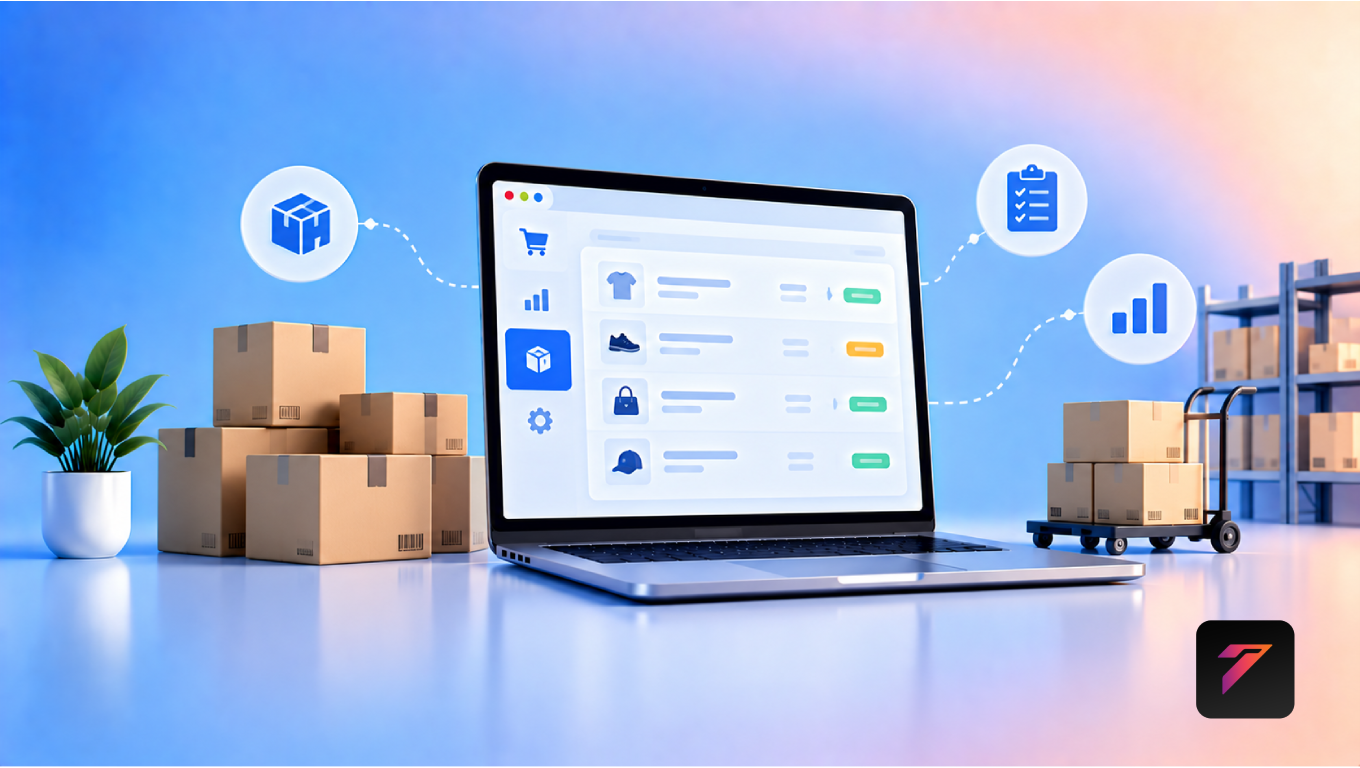

Running an e-commerce business involves more than selling products online. Businesses must also manage inventory, orders, customers, warehouses, suppliers, payments, shipping, and product information. When these systems operate separately, businesses can face stock inaccuracies, delayed updates, order-processing problems, and unnecessary manual work.
This is where inventory management integration becomes valuable.
Inventory management integration connects an e-commerce website or online store with inventory systems, marketplaces, warehouses, accounting platforms, ERP software, shipping services, and other business tools. When properly implemented, information can move between systems more efficiently and provide businesses with better visibility into their stock and operations.
For growing e-commerce businesses, integrated inventory management can support more accurate stock control, faster order processing, improved customer experiences, and scalable operations.
In this guide, we will explain what inventory management integration is, how it works, its major benefits, important features, implementation steps, common challenges, and best practices for e-commerce businesses.
What Is Inventory Management Integration?
Inventory management integration is the process of connecting an inventory management system with an e-commerce website, online store, marketplace, ERP, warehouse system, or other business applications.
The purpose is to synchronize important inventory information between connected platforms.
For example:
Customer Places Order
↓
E-commerce Website
↓
Inventory System
↓
Stock Quantity Updated
↓
Warehouse Receives Order
↓
Shipping Process Begins
Instead of manually entering the same information into multiple systems, integrated platforms can exchange relevant data automatically.
The exact level of automation depends on the technologies, APIs, integrations, and workflows used by the business.
Build a Website That Grows Your Business
A professionally developed website is the foundation of your online success. If you’re planning to create a responsive, fast, and SEO-friendly business website, explore our Website Development Services to see how Hashseven can help transform your ideas into a powerful digital presence.
Why Inventory Management Matters in E-commerce
Inventory directly affects the customer experience and operational efficiency of an online business.
If inventory information is inaccurate, businesses may experience:
- Overselling
- Stockouts
- Delayed orders
- Cancelled orders
- Incorrect product availability
- Manual reconciliation
- Customer complaints
- Warehouse confusion
For example, if an e-commerce website shows that a product is available when the actual inventory is zero, a customer may place an order that the business cannot fulfill.
Accurate inventory information helps businesses make better operational decisions.
1. Keeps Inventory Data Synchronized
One of the main benefits of inventory management integration is synchronized inventory information.
When stock changes in one connected system, the relevant information can be updated across other systems.
For example:
Warehouse Stock: 50
↓
Customer Purchases 3
↓
Updated Stock: 47
↓
Online Store Displays Available Quantity
This reduces the need for employees to update multiple platforms manually.
2. Reduces Overselling
Overselling occurs when a business accepts more orders than the available inventory can support.
This can happen when inventory information is delayed or inconsistent across sales channels.
Integration can help synchronize stock quantities between:
- E-commerce websites
- Marketplaces
- Physical stores
- Warehouses
- Mobile applications
When implemented correctly, this can reduce inventory conflicts.
3. Helps Prevent Stockouts
Stockouts occur when customers want to purchase a product but the business has no available inventory.
An integrated inventory system can provide better visibility into stock levels.
Businesses can configure alerts when inventory reaches predefined thresholds.
For example:
Current Stock: 12
↓
Reorder Level: 10
↓
Low Stock Alert
↓
Purchase Order Created
This can help businesses replenish products before inventory becomes critically low.
4. Improves Order Processing
Order processing involves several steps.
A typical process may include:
Order Received
↓
Payment Confirmed
↓
Inventory Reserved
↓
Warehouse Notified
↓
Product Picked
↓
Product Packed
↓
Shipment Created
An integrated system can connect these steps and reduce manual data entry.
5. Provides Real-Time or Near-Real-Time Inventory Visibility
Businesses need to know how much inventory is available.
An integrated system can provide visibility into:
- Available stock
- Reserved stock
- Incoming inventory
- Warehouse stock
- Low-stock products
- Sold products
- Returned products
The exact update frequency depends on the integration architecture and systems involved.
6. Supports Multiple Sales Channels
Many e-commerce businesses sell through more than one channel.
For example:
- Company website
- Online marketplaces
- Mobile app
- Social commerce
- Physical retail store
Managing inventory separately for every channel can become difficult.
Inventory integration allows businesses to synchronize relevant stock information across supported sales channels.
7. Simplifies Multi-Warehouse Management
Growing businesses may operate multiple warehouses.
For example:
Warehouse A
→ 150 units
Warehouse B
→ 80 units
Warehouse C
→ 120 units
A centralized system can provide a consolidated view of inventory while maintaining warehouse-level information.
This can help businesses understand where products are located and support more efficient order fulfillment.
8. Improves Warehouse Operations
Warehouse employees need accurate order and inventory information.
Integration can help connect the e-commerce system with warehouse workflows.
For example:
Online Order
↓
Warehouse Management System
↓
Picking List
↓
Packing
↓
Shipping
This reduces unnecessary manual data entry between platforms.
9. Helps Improve Inventory Accuracy
Manual inventory updates can result in mistakes.
Employees may accidentally:
- Enter incorrect quantities
- Forget to update stock
- Update the wrong product
- Duplicate records
- Miss returned products
Automated synchronization can reduce some of these errors.
Businesses should still perform regular inventory audits because integration does not eliminate every possible source of data inconsistency.
10. Supports Better Customer Experience
Customers expect accurate product availability.
If a website says “In Stock,” customers generally expect to be able to purchase the product.
Accurate inventory information can help businesses provide:
- Reliable availability
- Faster order confirmation
- Fewer cancellations
- Better delivery expectations
- More accurate product information
This can contribute to a smoother shopping experience.
11. Makes Returns Management Easier
Returns can affect inventory records.
When a returned product is received and approved for resale, the inventory system may need to reflect the updated quantity.
A connected workflow can help manage:
Return Request
↓
Return Approved
↓
Product Received
↓
Quality Check
↓
Inventory Updated
The exact workflow depends on the business’s return policy and inventory system.
12. Supports Product Variations
E-commerce businesses often sell products with variations such as:
- Size
- Color
- Model
- Capacity
- Material
Each variation may have its own inventory quantity.
For example:
T-Shirt
- Small: 15
- Medium: 25
- Large: 10
- XL: 8
Integration can help synchronize inventory at the SKU or product-variation level.
13. Helps Manage SKUs
Stock Keeping Units, commonly called SKUs, help businesses identify individual products or product variations.
An integrated inventory system can connect SKUs across:
- Website
- Warehouse
- ERP
- Marketplace
- Accounting system
Consistent SKU management can make inventory tracking easier.
14. Supports Automated Reordering
Businesses can configure reorder rules based on inventory levels.
For example:
Stock Falls Below Threshold
↓
Reorder Alert
↓
Purchase Order
↓
Supplier
↓
Incoming Inventory
This can help reduce the risk of running out of important products.
Automated purchasing should be configured carefully because reorder requirements may depend on demand, supplier lead time, seasonality, and available storage.
15. Improves Demand Planning
Historical inventory and sales information can help businesses understand demand patterns.
Businesses may analyze:
- Best-selling products
- Slow-moving products
- Seasonal demand
- Regional demand
- Sales trends
- Product returns
These insights can support inventory planning.
16. Connects Inventory With ERP Systems
Enterprise Resource Planning systems can contain important business information.
Inventory integration can connect e-commerce operations with ERP systems that manage areas such as:
- Procurement
- Inventory
- Finance
- Sales
- Operations
- Suppliers
This can help create a more connected business environment.
17. Connects Inventory With Accounting
Inventory information can also affect financial reporting.
Depending on the system, businesses may need to synchronize information related to:
- Orders
- Product costs
- Sales
- Returns
- Inventory value
Connecting e-commerce and accounting systems can reduce repetitive data entry.
18. Supports Shipping Integration
Inventory and shipping operations are closely connected.
When an order is confirmed, the system may need to communicate with shipping software.
A typical workflow is:
Customer Order
↓
Inventory Reserved
↓
Shipping Information Created
↓
Courier Selected
↓
Tracking Number Generated
↓
Customer Notified
Integration can connect these processes.
19. Helps Businesses Scale
Manual inventory processes may become increasingly difficult as order volume increases.
A business processing a few orders per day may manage inventory manually.
A business processing hundreds or thousands of orders may require automation and system integration.
Scalable inventory architecture can help businesses handle increasing:
- Products
- Orders
- Warehouses
- Sales channels
- Customers
- Employees
20. Reduces Manual Administrative Work
Without integration, employees may repeatedly copy information between systems.
For example:
Website → Inventory System → Warehouse → Accounting → Shipping
If these systems are disconnected, the same order information may need to be entered several times.
Integration can automate parts of this workflow and allow employees to focus on higher-value tasks.
Key Systems That Can Be Integrated With Inventory
An e-commerce inventory system can potentially connect with several platforms.
E-Commerce Platform
Examples include:
- Online stores
- Custom e-commerce websites
- Mobile commerce applications
ERP
Connect inventory with broader business operations.
Warehouse Management System
Synchronize warehouse stock and fulfillment information.
CRM
Connect customer and order information.
Accounting Software
Synchronize relevant financial information.
Marketplaces
Connect product and inventory information across supported marketplaces.
Shipping Platforms
Automate shipment and tracking workflows.
Payment Gateways
Connect order and payment status.
Supplier Systems
Support procurement and replenishment workflows.
Important Features of Inventory Management Integration
A successful integration may include several important capabilities.
Inventory Synchronization
Keep inventory information consistent across connected systems.
Order Synchronization
Send order information between platforms.
Product Synchronization
Keep product and SKU information aligned.
Stock Alerts
Notify employees when inventory reaches defined thresholds.
Multi-Location Management
Track inventory across multiple warehouses or locations.
Return Synchronization
Update inventory based on approved returns.
Purchase Order Integration
Connect stock requirements with procurement workflows.
Reporting
Provide inventory and sales information for analysis.
API Integration
Allow systems to communicate programmatically.
Error Monitoring
Identify failed or incomplete synchronization.
How Inventory Management Integration Works
The exact architecture depends on the systems being connected.
A common workflow may look like this:
Step 1: Customer Places an Order
The customer purchases a product through the e-commerce website.
Step 2: Order Information Is Recorded
The e-commerce platform records the order.
Step 3: Inventory Is Updated
The inventory system receives the relevant information.
Step 4: Stock Is Reserved
The required quantity is reserved for fulfillment.
Step 5: Warehouse Receives the Order
The warehouse system receives the fulfillment information.
Step 6: Product Is Shipped
The product is picked, packed, and shipped.
Step 7: Tracking Information Is Updated
Shipping information can be synchronized with the e-commerce platform.
Step 8: Customer Receives Updates
The customer may receive order and delivery notifications.
API-Based Inventory Integration
APIs are commonly used to connect e-commerce platforms with external systems.
An API allows one software system to communicate with another according to defined rules.
For example:
E-Commerce API
↔
Inventory API
↔
Warehouse API
This can enable information such as product quantities, orders, and statuses to move between systems.
Businesses should consider authentication, error handling, rate limits, data validation, and monitoring when implementing API-based integrations.
Real-Time vs Scheduled Inventory Synchronization
Inventory synchronization can work in different ways.
Real-Time Synchronization
Information is exchanged immediately or with very low delay when supported by the systems.
This can be useful for high-volume businesses where inventory changes frequently.
Scheduled Synchronization
Data is synchronized at predefined intervals.
For example:
- Every 5 minutes
- Every 15 minutes
- Every hour
- Daily
The appropriate approach depends on business requirements, system capabilities, data volume, and integration costs.
Inventory Management Integration Best Practices
1. Define the Business Requirements
Before development, identify:
- Sales channels
- Warehouses
- Products
- SKUs
- Order volume
- Inventory workflows
- Existing software
- Required integrations
2. Maintain Consistent Product Data
Product IDs, SKUs, variations, and inventory units should be mapped consistently.
3. Choose a Reliable Data Source
Define which system should act as the primary source for specific types of information.
For example, the inventory system may be the source of truth for stock quantities.
4. Implement Error Handling
Integrations can fail because of:
- Network problems
- API errors
- Authentication issues
- Invalid data
- System downtime
The integration should detect and manage failures appropriately.
5. Monitor Synchronization
Businesses should monitor whether data is being transferred successfully.
6. Protect API Credentials
API keys, tokens, and other credentials should be stored securely.
7. Test Before Launch
Test:
- Product synchronization
- Stock updates
- Order creation
- Returns
- Cancellations
- Multi-channel orders
- Error scenarios
8. Plan for Scalability
The integration should be able to support future growth.
9. Maintain Data Backups
Important inventory and order data should have an appropriate backup strategy.
10. Review the Integration Regularly
Business requirements and third-party APIs can change over time.
Common Inventory Integration Challenges
Data Mismatch
Different systems may use different product IDs, SKUs, units, or naming conventions.
API Limitations
Third-party systems may impose rate limits or restrict available data.
Duplicate Orders
Poor synchronization logic can potentially create duplicate records.
Synchronization Delays
Network or system limitations can delay inventory updates.
Integration Failures
Temporary system outages can interrupt data synchronization.
Complex Product Variations
Products with many variations require careful SKU mapping.
Multi-Warehouse Complexity
Inventory allocation becomes more complicated when products are stored in multiple locations.
How to Handle Integration Errors
Businesses should have a clear error-management process.
A useful workflow can include:
Integration Error
↓
Error Detected
↓
Log Created
↓
Administrator Notified
↓
Retry Attempt
↓
Successful Synchronization
If the retry fails, the issue can be escalated for manual review.
How Inventory Integration Supports Business Analytics
Integrated data can provide businesses with a more complete view of operations.
Businesses can analyze:
- Sales velocity
- Inventory turnover
- Stock availability
- Product performance
- Warehouse performance
- Return rates
- Reorder patterns
These insights can support inventory planning and operational decisions.
Inventory Management Integration and AI
AI can complement inventory systems when sufficient, reliable data is available.
Potential applications include:
- Demand forecasting
- Product demand analysis
- Stock-level recommendations
- Anomaly detection
- Sales trend analysis
- Replenishment suggestions
AI recommendations should be reviewed against business conditions, especially when demand is affected by seasonality, promotions, supplier constraints, or unusual market conditions.
How to Choose an Inventory Integration Solution
Before choosing an integration approach, businesses should evaluate:
Business Requirements
Understand the actual inventory and fulfillment workflow.
Existing Platforms
Identify the e-commerce, ERP, warehouse, accounting, and shipping systems already being used.
API Availability
Check whether the required systems provide suitable APIs or integration mechanisms.
Data Volume
Consider product count, order volume, and synchronization frequency.
Scalability
Ensure the architecture can support future growth.
Security
Evaluate authentication and data-protection requirements.
Monitoring
Choose an approach that provides visibility into integration errors.
Total Cost
Consider development, software, hosting, maintenance, and third-party service costs.
When Should an E-commerce Business Integrate Inventory Management?
Inventory integration becomes particularly useful when a business:
- Sells through multiple channels
- Manages multiple warehouses
- Has a large product catalog
- Processes many orders
- Frequently updates inventory
- Uses an ERP
- Uses warehouse management software
- Needs automated reorder workflows
- Experiences inventory inconsistencies
- Spends significant time on manual stock updates
For a very small store with a limited product range, a simple inventory solution may be sufficient.
How Hashseven Can Help
Successful inventory management integration requires more than connecting two systems. The integration should match the business’s product structure, order workflow, inventory rules, warehouse processes, and existing software.
Hashseven provides technology solutions including:
- E-commerce development
- API integration
- Custom web application development
- CRM development
- ERP development
- Business automation
- Database development
- Custom admin panel development
- UI/UX design
- Digital transformation solutions
A customized integration can connect an e-commerce website with inventory, ERP, CRM, warehouse, accounting, shipping, and other business systems according to the required workflow.
Need to connect your e-commerce website with an inventory system? Contact Hashseven to discuss inventory management integration, API development, e-commerce solutions, and business automation.
Conclusion
Inventory management integration can help e-commerce businesses create a more connected and efficient operational environment.
By connecting online stores with inventory systems, warehouses, marketplaces, ERP platforms, accounting software, shipping services, and other business applications, businesses can reduce repetitive data entry and improve visibility into inventory and order operations.
Integration can also support accurate stock information, multi-channel selling, warehouse management, automated alerts, order processing, reporting, and future scalability.
However, successful integration depends on proper planning. Businesses should define their requirements, maintain consistent product and SKU data, choose appropriate synchronization methods, implement strong error handling, secure API credentials, and monitor the integration after deployment.
For growing e-commerce businesses, a well-designed inventory integration strategy can provide the foundation needed to manage products and orders more efficiently while preparing the business for future growth.
Frequently Asked Questions
1. What is inventory management integration?
Inventory management integration connects an e-commerce website or online store with inventory systems and other business platforms such as warehouses, ERP software, marketplaces, accounting systems, and shipping tools to synchronize relevant data.
2. How does inventory management integration help e-commerce businesses?
It can improve inventory visibility, reduce repetitive data entry, support order processing, synchronize stock across sales channels, help manage warehouses, and provide more accurate product availability.
3. Can inventory integration prevent overselling?
Inventory integration can help reduce overselling by synchronizing stock information across connected sales channels. However, the result depends on the integration architecture, synchronization speed, data accuracy, and proper system configuration.
4. Can inventory management systems integrate with ERP and warehouse software?
Yes. Depending on the systems involved, inventory platforms can integrate with ERP, warehouse management, accounting, CRM, shipping, marketplace, and e-commerce platforms through APIs or other supported integration methods.
5. Is inventory management integration suitable for small e-commerce businesses?
It can be useful for small businesses that sell through multiple channels or have growing inventory and order volumes. Businesses with very small catalogs and simple operations may only need a basic inventory solution until their requirements become more complex.
Ready to Build a Professional Website for Your Business?
Turn your business into a powerful online brand with Hashseven.
Since 2017, we’ve helped businesses grow through professional website development, mobile apps, custom software, SEO, digital marketing, CRM, POS solutions, and Meta-approved WhatsApp automation. Let’s create a fast, secure, and conversion-focused website that attracts more customers and drives real business growth.