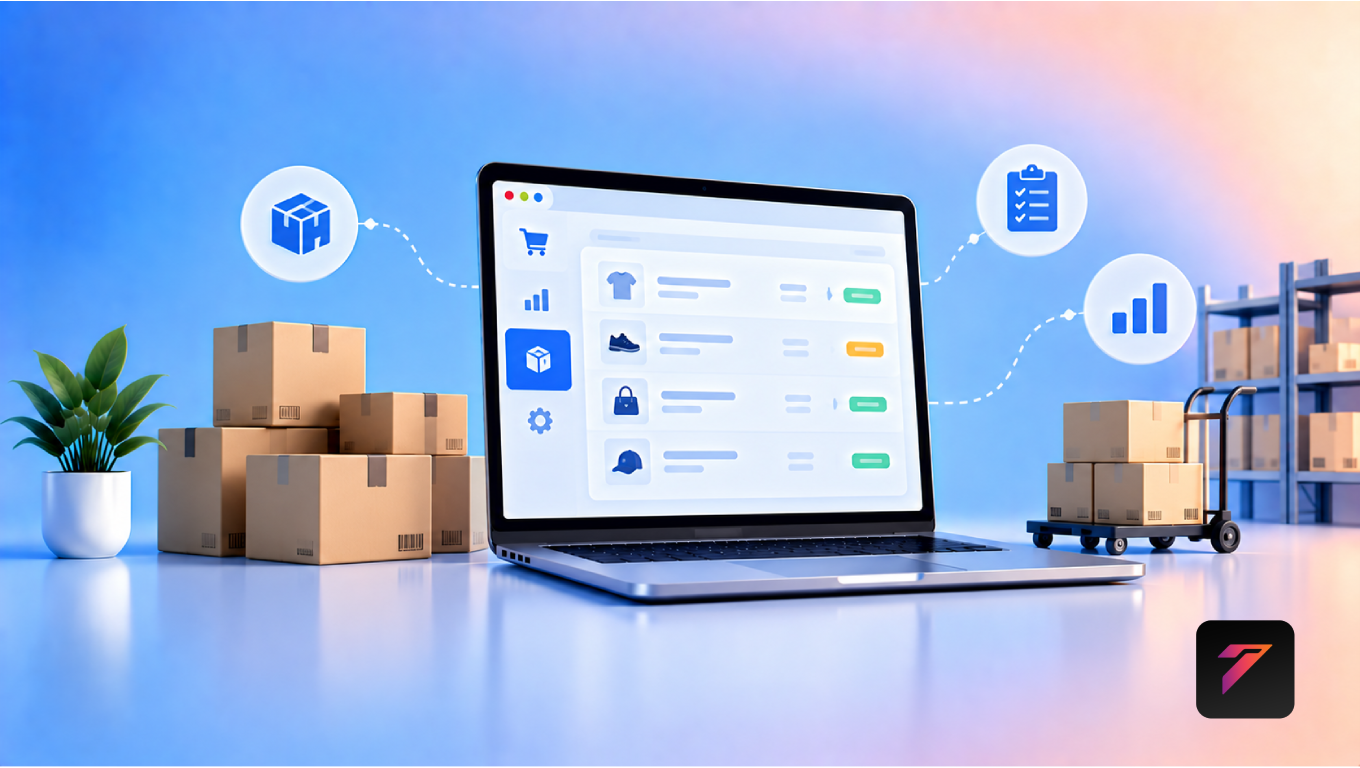

The right ecommerce website features can make a major difference in how customers discover products, evaluate options, complete purchases, and return for future orders. In 2026, customers expect online stores to be fast, secure, mobile-friendly, easy to navigate, and convenient to use.
An e-commerce website is no longer simply an online product catalog. Modern online stores combine product discovery, search, payments, customer accounts, order management, personalization, analytics, marketing, and customer support into one digital experience.
Businesses that invest in the right features can create a smoother shopping journey and reduce unnecessary friction during the buying process.
Whether you are launching a new online store, upgrading an existing website, or planning a custom e-commerce platform, understanding the essential ecommerce website features can help you prioritize functionality that supports both customers and business growth.
This guide explains the most important features every e-commerce website should consider in 2026.
What Are Ecommerce Website Features?
Ecommerce website features are the functions and capabilities that allow an online store to attract visitors, display products, process orders, accept payments, manage customers, and provide a smooth shopping experience.
These features can include:
- Product catalogs
- Search and filtering
- Shopping carts
- Secure checkout
- Payment gateways
- Customer accounts
- Order tracking
- Reviews and ratings
- Wishlist functionality
- Mobile-friendly design
- Product recommendations
- Inventory management
- Analytics
- Security
- Customer support
The exact features required depend on the size, industry, products, target customers, and business model.
Build a Website That Grows Your Business
A professionally developed website is the foundation of your online success. If you’re planning to create a responsive, fast, and SEO-friendly business website, explore our Website Development Services to see how Hashseven can help transform your ideas into a powerful digital presence.
Why Ecommerce Website Features Matter in 2026
Competition in online commerce continues to increase.
Customers can compare products, prices, reviews, shipping options, and brands within minutes.
This means businesses need to create experiences that are:
- Fast
- Simple
- Secure
- Informative
- Mobile-friendly
- Personalized
- Convenient
A website with excellent products but a complicated checkout process can still lose customers.
The goal is therefore not to add every possible feature. Instead, businesses should select features that improve customer experience and support measurable business objectives.
1. Responsive and Mobile-Friendly Design
A mobile-friendly website is one of the most important ecommerce website features in 2026.
Customers may browse online stores using:
- Smartphones
- Tablets
- Laptops
- Desktop computers
An e-commerce website should automatically adapt to different screen sizes.
Important mobile design elements include:
- Easy-to-read text
- Touch-friendly buttons
- Simple navigation
- Responsive product images
- Mobile-friendly checkout
- Fast loading pages
- Accessible menus
A poor mobile experience can cause customers to leave before completing a purchase.
2. Fast Website Performance
Speed directly affects the shopping experience.
Customers don’t want to wait for:
- Product pages
- Images
- Search results
- Shopping carts
- Checkout pages
A fast e-commerce website allows customers to move through the buying journey with less friction.
Businesses should optimize:
- Images
- CSS
- JavaScript
- Hosting
- Caching
- Database performance
- Third-party scripts
Website performance should be tested regularly across desktop and mobile devices.
3. Easy Website Navigation
Customers should be able to find products without confusion.
A clear navigation structure can include:
- Home
- Categories
- Subcategories
- Products
- Offers
- New arrivals
- Contact
- Customer account
Navigation should reflect the way customers naturally search for products.
For larger stores, mega menus and structured category pages can help customers discover products faster.
4. Powerful Product Search
A strong search function is essential for stores with large product catalogs.
Customers should be able to search using:
- Product names
- Product types
- Brands
- Categories
- Keywords
- Product codes
Advanced search can also support:
- Autocomplete
- Search suggestions
- Spelling correction
- Recent searches
- Popular searches
An effective search experience helps customers reach relevant products quickly.
5. Advanced Product Filters
Product filters allow shoppers to narrow down large catalogs.
Depending on the industry, filters may include:
- Price
- Brand
- Size
- Color
- Material
- Rating
- Availability
- Category
- Features
For example, an online clothing store might allow users to filter products by size, color, brand, price, and style.
Good filtering reduces the amount of effort required to find suitable products.
6. Detailed Product Pages
A product page is one of the most important parts of an online store.
A strong product page should provide:
- Product name
- High-quality images
- Product description
- Price
- Product variations
- Availability
- Specifications
- Reviews
- Shipping information
- Return information
- Add-to-cart button
Customers should have enough information to make an informed purchasing decision.
7. High-Quality Product Images
Customers cannot physically examine products online.
Images therefore play a major role in product evaluation.
Use:
- Multiple product angles
- Zoom functionality
- Lifestyle images
- Product close-ups
- Different color variations
- Consistent backgrounds
Images should also be optimized for website performance.
Large, uncompressed images can slow product pages.
8. Product Videos
Video can provide information that static images cannot.
Depending on the product, businesses can use videos to demonstrate:
- Product usage
- Product size
- Features
- Assembly
- Performance
- Styling
- Unboxing
Short product demonstrations can help customers understand products more clearly.
9. Customer Reviews and Ratings
Reviews are important trust signals for online shoppers.
An e-commerce website should allow customers to:
- Rate products
- Write reviews
- Upload photos
- Share experiences
Businesses should display genuine customer feedback clearly.
Reviews can help new customers understand product quality and make more confident decisions.
10. Secure Shopping Cart
The shopping cart should be simple and easy to understand.
Customers should be able to:
- Add products
- Remove products
- Change quantities
- View prices
- Apply coupons
- Estimate shipping
- Continue shopping
The cart should clearly show the total cost before checkout.
Unexpected costs are a common source of shopping frustration.
11. Simple Checkout Process
A complicated checkout can lead to abandoned carts.
The checkout process should be:
- Clear
- Fast
- Secure
- Mobile-friendly
Businesses should minimize unnecessary form fields.
A good checkout experience can include:
- Guest checkout
- Address autocomplete
- Multiple payment options
- Order summary
- Shipping selection
- Coupon codes
- Clear error messages
The fewer unnecessary steps customers need to complete, the easier the purchasing process becomes.
12. Multiple Payment Options
Different customers prefer different payment methods.
Depending on the target market, an online store may support:
- Credit cards
- Debit cards
- Digital wallets
- Bank transfers
- Buy-now-pay-later options
- Local payment methods
- Cash on delivery where appropriate
Businesses should choose payment methods based on customer preferences and market requirements.
Payment security should always be a priority.
13. Secure Payment Processing
Customers need confidence when entering payment information.
An e-commerce website should use:
- HTTPS
- Secure payment gateways
- Strong authentication
- Secure APIs
- Proper access controls
- Regular security updates
Businesses should avoid storing sensitive payment information unnecessarily.
For security guidance, businesses can refer to the OWASP Top 10, which provides information about common web application security risks.
14. Customer Account Management
Customer accounts can make repeat purchases easier.
Account functionality can allow users to:
- View orders
- Track shipments
- Save addresses
- Manage profiles
- View invoices
- Save payment preferences
- Create wishlists
- Manage subscriptions
However, businesses should also provide guest checkout when appropriate.
Not every customer wants to create an account before purchasing.
15. Wishlist Functionality
A wishlist allows customers to save products for future consideration.
Customers may use wishlists when:
- Comparing products
- Waiting for discounts
- Planning purchases
- Saving gifts
- Returning later
Wishlists can also provide businesses with useful behavioral insights.
16. Product Recommendations
Personalized recommendations can help customers discover relevant products.
Examples include:
- Related products
- Frequently bought together
- Recently viewed items
- Recommended products
- Similar products
- Personalized suggestions
Recommendations can increase product discovery and potentially improve average order value.
17. Inventory Availability
Customers should be able to see whether products are available.
Useful inventory information includes:
- In stock
- Low stock
- Out of stock
- Expected availability
- Pre-order status
Accurate inventory data is especially important when a business sells through multiple channels.
18. Real-Time Order Tracking
Customers want visibility after making a purchase.
Order tracking can show:
- Order confirmation
- Processing
- Packed
- Shipped
- In transit
- Out for delivery
- Delivered
Providing this information reduces uncertainty and can decrease the number of customers contacting support for basic order updates.
19. Shipping Options
Different customers have different delivery requirements.
Businesses can provide options such as:
- Standard shipping
- Express shipping
- Same-day delivery
- Store pickup
- Scheduled delivery
Shipping costs and estimated delivery dates should be displayed clearly before customers complete payment.
20. Easy Returns and Refund Information
Return policies should be easy to find.
Customers should understand:
- Return period
- Eligible products
- Refund process
- Exchange options
- Return shipping
- Conditions
A clear policy builds confidence and reduces confusion after purchase.
21. Coupons and Discount Codes
Promotional functionality allows businesses to create:
- Discount codes
- Percentage discounts
- Fixed discounts
- Free shipping offers
- Seasonal promotions
- Customer-specific offers
The coupon system should clearly communicate whether a code has been successfully applied.
22. Customer Support
Online shoppers may need assistance before or after purchasing.
Customer support features can include:
- Contact forms
- Live chat
- AI chatbots
- FAQs
- Email support
- Phone support
- Help centers
Providing multiple support options can improve the customer experience.
23. AI-Powered Shopping Assistance
AI is becoming increasingly useful in e-commerce.
AI can support:
- Product recommendations
- Conversational search
- Customer support
- Product comparisons
- Personalized experiences
- Shopping assistants
- Automated responses
For example, customers could ask:
“Which laptop is best for graphic design under my budget?”
An AI shopping assistant could analyze available products and provide relevant recommendations.
AI should be implemented carefully and should provide accurate information.
24. Personalized Customer Experience
Personalization can make an online store more relevant to individual shoppers.
Businesses can personalize:
- Product recommendations
- Offers
- Content
- Search results
- Email campaigns
- Recently viewed products
Personalization should be transparent and implemented with appropriate privacy practices.
25. Strong Product Categorization
Products should be organized into logical categories.
For example, an electronics store might use:
Computers → Laptops → Gaming Laptops
A clothing store might use:
Men → Shirts → Casual Shirts
Logical categorization improves navigation and product discovery.
26. SEO-Friendly Product Pages
Search engine optimization should be integrated into e-commerce architecture.
Important elements include:
- SEO-friendly URLs
- Product titles
- Meta descriptions
- Optimized headings
- Image ALT text
- Internal links
- Structured data
- Canonical URLs
- Useful product descriptions
Product pages should be created for users first while maintaining a clear technical structure for search engines.
Businesses can review Google Search Central for official search documentation.
27. Product Structured Data
Structured data can help search engines understand product information.
Depending on the implementation, businesses can provide information such as:
- Product name
- Brand
- Price
- Availability
- Reviews
- Ratings
When eligible, structured data can support enhanced search result presentations.
Businesses should follow current search engine guidelines rather than adding structured data incorrectly.
28. Analytics and Reporting
Analytics helps businesses understand how customers interact with an online store.
Important metrics include:
- Website traffic
- Product views
- Add-to-cart rate
- Checkout abandonment
- Conversion rate
- Average order value
- Revenue
- Customer acquisition
- Repeat purchases
These insights help businesses identify which areas of the shopping journey need improvement.
29. Abandoned Cart Recovery
Some customers add products to their cart but don’t complete the purchase.
Abandoned cart functionality can help businesses send reminders through suitable channels.
For example:
Product added → Customer leaves → Reminder sent → Customer returns → Purchase completed
Businesses should use appropriate consent and privacy practices when sending marketing communications.
30. Social Media Integration
Social platforms can help businesses promote products and attract customers.
An e-commerce website can integrate social media through:
- Social sharing
- Product promotion
- Social proof
- Campaign landing pages
- Social commerce integrations
Social media should complement the website rather than replace the business’s owned digital presence.
31. Multilingual and Multi-Currency Support
Businesses selling internationally may require:
- Multiple languages
- Multiple currencies
- Regional pricing
- Local payment methods
- Local shipping options
This functionality can make international shopping easier.
However, international e-commerce requires careful planning around taxes, shipping, regulations, and customer support.
32. Customer Loyalty Programs
Loyalty programs encourage repeat purchases.
Businesses can offer:
- Points
- Rewards
- Membership benefits
- Exclusive discounts
- Referral rewards
- Birthday offers
A well-designed loyalty program can strengthen long-term customer relationships.
33. Referral Programs
Referral functionality encourages existing customers to recommend products to others.
A referral system can include:
- Referral links
- Referral codes
- Customer rewards
- Discount incentives
This can turn satisfied customers into an additional acquisition channel.
34. Accessibility Features
An e-commerce website should be usable by as many people as possible.
Businesses should consider:
- Keyboard navigation
- Clear labels
- Readable text
- Adequate contrast
- Alternative text
- Accessible forms
- Logical navigation
Accessibility improves usability and can help businesses serve a broader audience.
35. Strong Website Security
Security should be a core part of every e-commerce website.
Important practices include:
- HTTPS
- Secure authentication
- Strong passwords
- Role-based access
- Secure APIs
- Regular software updates
- Security monitoring
- Data backups
- Vulnerability testing
Security isn’t a one-time task. It requires ongoing monitoring and maintenance.
36. Backup and Recovery System
Technical problems can occur unexpectedly.
A backup strategy can help businesses recover from:
- Server failures
- Database problems
- Cybersecurity incidents
- Accidental deletion
- Software failures
Backups should be performed regularly and tested to ensure they can actually be restored.
37. Admin Dashboard
Store administrators need an easy way to manage the website.
A good dashboard can provide access to:
- Products
- Orders
- Customers
- Inventory
- Discounts
- Reports
- Content
- Reviews
A well-designed dashboard can reduce administrative workload.
38. Inventory and Order Management
For growing stores, inventory and order management become increasingly important.
A centralized system can help manage:
- Stock levels
- Product variants
- Orders
- Returns
- Warehouses
- Suppliers
- Shipping
Integration with ERP or inventory management systems can further improve operational efficiency.
39. Integration With Business Software
Modern e-commerce businesses may need to connect their website with:
- CRM
- ERP
- Accounting software
- Inventory systems
- Marketing platforms
- Payment gateways
- Shipping providers
APIs can help different systems exchange information.
This reduces manual data entry and creates a more connected business ecosystem.
40. Scalable Architecture
An e-commerce website should be able to grow with the business.
Scalability becomes important when the store experiences:
- More customers
- More products
- More orders
- Seasonal traffic
- New locations
- International expansion
Businesses should consider scalability during the planning stage rather than waiting until performance problems appear.
Essential Ecommerce Website Features Checklist
Before launching an online store, review this checklist:
- Responsive design
- Fast loading speed
- Clear navigation
- Product search
- Product filters
- Detailed product pages
- High-quality images
- Product videos
- Reviews and ratings
- Shopping cart
- Simple checkout
- Multiple payment options
- Secure payment processing
- Customer accounts
- Wishlist
- Product recommendations
- Inventory management
- Order tracking
- Shipping options
- Return information
- Coupons
- Customer support
- AI assistance
- Personalization
- SEO-friendly pages
- Structured data
- Analytics
- Abandoned cart recovery
- Social integration
- Accessibility
- Website security
- Backups
- Admin dashboard
- Business integrations
- Scalable architecture
How to Prioritize Ecommerce Website Features
Businesses don’t necessarily need to launch with every feature.
A practical approach is to divide functionality into three categories.
Essential Features
These should usually be available at launch:
- Product catalog
- Search
- Navigation
- Product pages
- Shopping cart
- Checkout
- Payment processing
- Security
- Mobile responsiveness
- Order management
Growth Features
These can be added as the business grows:
- Product recommendations
- Loyalty programs
- Advanced analytics
- Abandoned cart recovery
- Personalization
- Referral systems
Advanced Features
Larger businesses may consider:
- AI shopping assistants
- Advanced personalization
- Multi-region commerce
- Complex integrations
- Predictive analytics
- Advanced automation
This approach allows businesses to launch faster while continuing to improve the platform over time.
How to Choose the Right Ecommerce Platform
When selecting an e-commerce platform, consider:
- Business size
- Product catalog
- Budget
- Customization requirements
- Payment options
- Shipping requirements
- SEO capabilities
- Security
- Integrations
- Scalability
- Maintenance
- Technical expertise
The best platform is not necessarily the one with the most features.
It is the platform that provides the right balance of functionality, usability, cost, scalability, and control for your business.
Future of Ecommerce Websites in 2026
E-commerce will continue to become more personalized, automated, and customer-focused.
Businesses can expect greater adoption of:
- AI shopping assistants
- Conversational commerce
- Personalized recommendations
- Automated customer support
- Voice-enabled shopping
- Advanced analytics
- Social commerce
- Faster checkout
- Headless commerce
- Omnichannel experiences
However, technology should always support a clear business objective.
Adding advanced functionality without considering usability can make an online store more complicated instead of better.
Frequently Asked Questions
1. What are the most important ecommerce website features?
The most important ecommerce website features include responsive design, fast performance, product search, product pages, shopping carts, secure checkout, payment options, order tracking, security, and analytics.
2. Why is mobile-friendly design important for e-commerce?
Many customers browse and purchase products using smartphones. A mobile-friendly design makes navigation, product discovery, checkout, and payment easier across different screen sizes.
3. How can ecommerce website features improve sales?
Features such as product recommendations, reviews, fast checkout, search filters, personalized experiences, secure payments, and abandoned cart recovery can reduce shopping friction and create more opportunities for conversions.
4. Does an e-commerce website need SEO features?
Yes. SEO-friendly URLs, product descriptions, headings, image ALT text, internal links, structured data, and technical optimization can help search engines understand product pages and improve organic visibility.
5. What ecommerce website features will become more important in 2026?
AI-powered shopping assistants, personalization, conversational commerce, advanced analytics, automation, faster checkout, mobile optimization, and integrated customer experiences are likely to become increasingly important.
Conclusion
The right ecommerce website features can transform an online store from a simple product catalog into a complete digital shopping experience.
In 2026, businesses should prioritize features that make shopping easier, faster, safer, and more personalized. Responsive design, website performance, product search, detailed product pages, secure payments, simple checkout, reviews, order tracking, analytics, and strong security form the foundation of a successful e-commerce website.
Advanced features such as AI shopping assistants, personalization, loyalty programs, automation, and business integrations can provide additional value as the business grows.
However, successful e-commerce isn’t about adding as many features as possible. It is about choosing the features that solve real customer problems and support measurable business goals.
By combining strong user experience, reliable technology, SEO, security, and scalable architecture, businesses can create an e-commerce website that is prepared for changing customer expectations and long-term digital growth.
Ready to Build a Professional Website for Your Business?
Turn your business into a powerful online brand with Hashseven.
Since 2017, we’ve helped businesses grow through professional website development, mobile apps, custom software, SEO, digital marketing, CRM, POS solutions, and Meta-approved WhatsApp automation. Let’s create a fast, secure, and conversion-focused website that attracts more customers and drives real business growth.