
Landing pages play an important role in digital marketing because they give businesses a focused way to turn online visitors into potential customers. Instead of sending every visitor to a general homepage, businesses can create dedicated pages designed around a specific campaign, service, product, audience, or conversion goal.
Effective landing page development combines strategic content, user-focused design, clear calls to action, trust signals, responsive layouts, performance optimization, and analytics. When these elements work together, landing pages can help businesses attract relevant prospects and encourage them to take meaningful actions.
A visitor may arrive through Google Search, a social media campaign, an email, an online advertisement, or another website. The landing page then provides information relevant to that visitor’s intent and guides them toward the next step.
In this guide, we will explore what landing pages are, why they matter for lead generation, how they help qualify prospects, essential landing page elements, common mistakes, SEO considerations, optimization strategies, analytics, and practical steps businesses can follow to build more effective landing pages.
What Is a Landing Page?
A landing page is a dedicated webpage created to support a specific marketing or conversion objective.
Unlike a general website page, a landing page usually focuses on one primary goal.
Examples include:
- Requesting a quote
- Booking a consultation
- Downloading an ebook
- Registering for an event
- Requesting a product demo
- Starting a free trial
- Purchasing a product
- Submitting an inquiry
For example, a digital marketing campaign might direct users to:
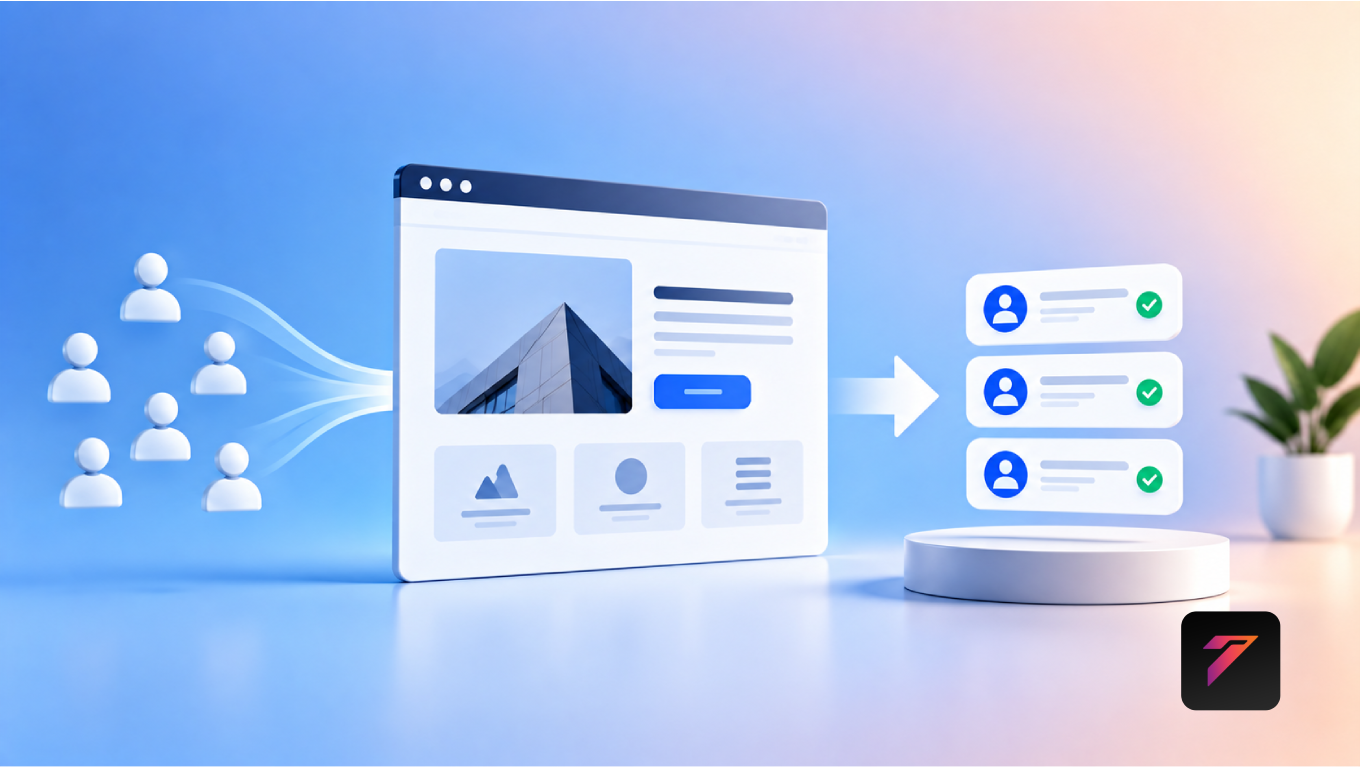
Advertisement → Landing Page → Lead Form → Sales Follow-Up
This focused journey can reduce distractions and make the intended action easier to understand.
Build a Website That Grows Your Business
A professionally developed website is the foundation of your online success. If you’re planning to create a responsive, fast, and SEO-friendly business website, explore our Website Development Services to see how Hashseven can help transform your ideas into a powerful digital presence.
What Is Landing Page Development?
Landing page development is the process of planning, designing, building, testing, and optimizing landing pages to support specific business and marketing objectives.
It can involve:
- User research
- Content planning
- UI/UX design
- Copywriting
- Front-end development
- Responsive design
- Form development
- SEO
- Analytics
- Conversion optimization
- CRM integration
- Performance optimization
A landing page should not be treated as just another webpage. Its structure should be connected to the campaign and the audience it serves.
Why Landing Pages Matter for Lead Generation
A general website may contain many navigation options and different types of information.
A landing page can provide a more focused experience.
This can help businesses:
- Capture visitor information
- Communicate a specific offer
- Explain a service
- Address customer concerns
- Build trust
- Encourage inquiries
- Segment leads
- Measure campaign performance
The effectiveness of a landing page depends on the audience, offer, traffic source, page experience, and conversion process.
Landing Pages vs Homepage
A homepage usually introduces the entire business.
A landing page typically focuses on one particular objective.
| Homepage | Landing Page |
|---|---|
| Represents the overall business | Supports a specific campaign or goal |
| Contains multiple sections | Usually has a focused message |
| Provides broader navigation | Often minimizes distractions |
| Introduces multiple services | Promotes one offer or service |
| General audience | Specific audience or campaign |
Both are important, but they serve different purposes.
How Landing Pages Generate Qualified Leads
Not every lead has the same level of interest.
A qualified lead is generally a prospect who meets specific criteria established by the business and shows meaningful interest in its product or service.
Landing pages can help qualify leads by collecting relevant information.
For example, a B2B service landing page might ask for:
- Name
- Business email
- Company
- Service required
- Project size
- Expected timeline
The appropriate fields depend on the business and should only collect information that is genuinely useful.
Match the Landing Page to Search Intent
A landing page should match what visitors expect to see after clicking an advertisement, search result, email, or social media post.
For example, if an advertisement promotes:
Custom Web Application Development
the landing page should clearly discuss custom web application development rather than sending visitors to a generic homepage.
Message consistency can reduce confusion and help visitors understand that they have reached the right destination.
Create a Strong Headline
The headline is one of the first elements visitors see.
A good headline should clearly communicate the page’s purpose.
For example:
Custom Web Applications Built Around Your Business Needs
is more specific than:
Welcome to Our Website
The headline should accurately represent the offer and align with the visitor’s expectations.
Use a Clear Value Proposition
A value proposition explains the benefit a visitor can expect.
It should answer questions such as:
- What is being offered?
- Who is it for?
- What problem does it address?
- What benefit does the visitor receive?
A clear value proposition can help visitors quickly decide whether the page is relevant to them.
Focus on One Primary Conversion Goal
A landing page should generally have one main conversion objective.
For example:
- Generate consultation requests
- Collect demo registrations
- Sell one product
- Download one resource
Multiple unrelated CTAs can create confusion.
Secondary actions can still be included when they support the primary goal, but the page should maintain a clear hierarchy.
Use Strong Calls to Action
Calls to action guide visitors toward the intended next step.
Examples include:
- Request a Quote
- Book a Consultation
- Get Started
- Request a Demo
- Download the Guide
- Start Your Trial
- Contact Our Team
CTA wording should clearly communicate what happens after the user clicks.
Place CTAs Strategically
CTAs can be placed at important points throughout a landing page.
Useful locations may include:
- Hero section
- After key benefits
- After social proof
- Near pricing information
- At the end of the page
The exact placement should depend on the page length and user journey.
Keep Lead Forms Simple
Forms are central to many lead-generation landing pages.
A form should request information that is necessary for the business to respond appropriately.
For example:
Name → Email → Business Requirement → Submit
Long forms can create friction.
However, collecting a few qualifying details can help sales teams understand whether a lead fits their target customer profile.
The right balance depends on the value of the offer and the sales process.
Use Trust Signals
Visitors may hesitate to submit personal or business information to an unfamiliar company.
Trust signals can help reduce uncertainty.
Examples include:
- Customer testimonials
- Reviews
- Case studies
- Certifications
- Industry memberships
- Awards
- Client results
- Security information
All trust signals should be authentic and verifiable.
Add Relevant Social Proof
Social proof demonstrates that other customers have interacted with the business.
Useful examples include:
- Customer quotes
- Ratings
- Project examples
- Client testimonials
- Case studies
- Verified reviews
Social proof is particularly useful when visitors are comparing different providers.
Use Case Studies to Support Lead Generation
Case studies can demonstrate how a business approaches real customer problems.
A useful structure is:
Challenge → Approach → Solution → Outcome
For B2B businesses, this can help potential customers understand the company’s capabilities before contacting the sales team.
Explain Benefits Before Features
Visitors usually want to know how an offering can help them.
Instead of listing features alone, businesses can explain the practical benefits.
For example:
Feature: Automated lead notifications
Benefit: Sales teams can receive new inquiries quickly and respond without manually checking forms.
This makes the landing page more relevant to business needs.
Use Visuals That Support the Offer
Images, illustrations, screenshots, product demonstrations, and videos can help explain an offering.
Visuals should support the page rather than distract from the conversion objective.
Businesses should avoid:
- Low-quality images
- Unrelated stock photography
- Excessive animation
- Heavy video backgrounds
- Visual clutter
Every major visual should have a purpose.
Make Landing Pages Mobile-Friendly
Many users access landing pages through smartphones.
Responsive landing page development should ensure that:
- Text is readable
- Buttons are easy to tap
- Forms work properly
- Images scale correctly
- Navigation does not interfere with content
- CTAs remain accessible
The mobile version should be designed as an intentional experience rather than simply shrinking the desktop page.
Improve Landing Page Speed
Page performance can influence user experience.
Businesses can improve landing page performance through:
- Image compression
- Modern image formats
- Efficient CSS
- Optimized JavaScript
- Browser caching
- Fast hosting
- Content delivery networks
- Reduced third-party scripts
Google’s PageSpeed Insights can be used to evaluate page performance.
Use Clear Page Structure
A landing page should guide visitors through a logical sequence.
A typical structure might be:
Headline → Value Proposition → Benefits → Features → Social Proof → Process → FAQ → CTA
The exact structure should depend on the product, audience, and conversion goal.
Remove Unnecessary Distractions
Landing pages often work better when unnecessary distractions are reduced.
Depending on the campaign, businesses may minimize:
- Excessive navigation
- Unrelated links
- Multiple competing offers
- Unnecessary pop-ups
- Decorative animations
This does not mean every landing page needs to remove the entire website navigation. The appropriate structure depends on the user journey and business requirements.
Create Campaign-Specific Landing Pages
Different campaigns can attract different audiences.
For example, a web development company could create separate landing pages for:
- Custom web application development
- E-commerce development
- WordPress development
- CRM development
- ERP development
Each page can address the specific needs and search intent associated with that service.
Personalize Landing Page Content
Businesses can create different landing page experiences for different audiences.
For example:
Audience A: Small businesses
Audience B: Enterprise companies
Audience C: E-commerce businesses
The core service may be similar, but the messaging, examples, benefits, and CTAs can be adjusted according to audience needs.
Personalization should be based on meaningful audience differences and should not make the page unnecessarily complex.
Use Landing Pages for Paid Advertising
Paid advertising platforms often allow businesses to direct users to specific landing pages.
A typical journey is:
Ad → Landing Page → Form → CRM → Sales Follow-Up
The landing page should closely match the advertisement.
For example, if an advertisement promises information about e-commerce development, the landing page should immediately address that topic.
Landing Page Development for SEO
Landing pages can also support organic search when they provide genuinely useful and relevant content.
Businesses should optimize:
- Page title
- Meta description
- Heading structure
- URL
- Content
- Internal links
- Images
- Page performance
- Mobile experience
Google’s SEO Starter Guide provides official guidance on creating search-friendly websites.
Use the Focus Keyword Naturally
For this article, the focus keyword is:
landing page development
It should appear naturally in important locations such as:
- Title
- Introduction
- Relevant headings
- Body content
- Meta title
- Meta description
- URL
- Image ALT text
Keyword usage should remain natural rather than forcing the phrase into every section.
Build Strong Internal Links
Internal links can guide visitors toward related pages.
For example:
Landing Page → Web Development Service → Case Study → Contact
Internal links can help users discover related information and help search engines understand website structure.
Add FAQs to Landing Pages
Frequently asked questions can address common objections before visitors submit a form.
Questions may include:
- How long does the service take?
- What does the service include?
- Who is the service suitable for?
- How much does it cost?
- Can the service be customized?
FAQs should answer genuine customer questions rather than being created solely to add keywords.
Address Customer Objections
Visitors may have concerns before becoming leads.
Common objections include:
- Price
- Timeline
- Quality
- Security
- Experience
- Support
- Customization
A landing page can address these concerns through transparent information, case studies, FAQs, process explanations, and trust signals.
Explain the Process
A simple process section can make a service easier to understand.
For example:
1. Consultation
Understand the business requirement.
2. Planning
Define scope, goals, and project requirements.
3. Development
Build and test the solution.
4. Launch
Deploy the completed project.
5. Support
Provide ongoing maintenance and improvements.
A clear process can reduce uncertainty and help visitors understand what happens after conversion.
Use CRM Integration
Landing pages can become more effective when connected to a CRM.
A typical workflow is:
Landing Page Form → CRM → Lead Assignment → Follow-Up → Sales
CRM integration can help businesses:
- Store lead information
- Assign leads
- Track follow-ups
- Segment prospects
- Monitor sales stages
- Reduce manual data entry
This is especially useful for businesses handling a large number of inquiries.
Use Marketing Automation
Automation can help businesses respond to new leads efficiently.
Examples include:
- Instant email confirmations
- Lead notifications
- Follow-up sequences
- Appointment reminders
- Lead scoring
- CRM updates
Automation should complement human sales and customer service rather than create an impersonal experience.
Lead Qualification Through Landing Pages
Landing pages can collect information that helps businesses determine whether a prospect fits their target market.
For example, a software company might ask:
Company Size: 1–10 / 11–50 / 51–200 / 200+
This information can help categorize inquiries.
However, qualification fields should be relevant and limited. Asking too many questions can reduce form completion.
Use Analytics to Measure Landing Page Performance
Analytics allow businesses to understand how visitors interact with landing pages.
Useful metrics include:
- Sessions
- Traffic sources
- Engagement
- Form starts
- Form completions
- Conversion rate
- Cost per lead
- Lead quality
- Bounce or exit behavior
Businesses should evaluate these metrics together rather than relying on a single number.
Track Conversion Rate
Landing page conversion rate measures the percentage of visitors who complete the desired action.
For example:
1,000 visitors → 80 leads
Conversion rate:
80 ÷ 1,000 × 100 = 8%
Conversion rates vary widely by industry, traffic source, offer, audience, and conversion goal, so businesses should compare performance against relevant historical data and campaign objectives.
Track Lead Quality
Generating more leads does not necessarily mean generating better leads.
Businesses should evaluate:
- Lead relevance
- Budget fit
- Service requirements
- Location
- Purchase intent
- Project timeline
- Conversion to sales
This helps distinguish simple form submissions from prospects that align with the company’s target market.
A/B Test Landing Pages
A/B testing involves comparing different versions of a page or element.
Businesses may test:
- Headlines
- CTA wording
- Form length
- Images
- Page layouts
- Benefits
- Social proof placement
Testing should focus on one meaningful variable at a time when practical and use an appropriate sample size before drawing conclusions.
Common Landing Page Mistakes
1. Sending All Traffic to the Homepage
A generic homepage may not match the visitor’s campaign intent.
2. Using a Weak Headline
Visitors should quickly understand what the page offers.
3. Multiple Competing CTAs
Too many unrelated actions can create confusion.
4. Long Forms
Excessive form fields can discourage submissions.
5. Missing Trust Signals
Visitors may hesitate when there is little evidence of credibility.
6. Poor Mobile Design
A landing page that works on desktop but not mobile can lose potential leads.
7. Slow Page Speed
Performance issues can negatively affect the user experience.
8. Unclear Value Proposition
Visitors should understand the benefit of the offer quickly.
9. Misleading Advertising
The landing page should accurately represent what the advertisement promises.
10. Ignoring Lead Quality
Businesses should evaluate the quality of generated leads, not only the number of submissions.
11. No Follow-Up Process
A submitted form is only the beginning of the sales journey.
12. Failing to Test
Assumptions about page performance should be validated with analytics and testing.
Best Practices for Landing Page Development
Businesses should follow these landing page development best practices:
- Define one primary conversion goal.
- Understand the target audience.
- Match the page with visitor intent.
- Create a clear value proposition.
- Write a specific headline.
- Use relevant supporting content.
- Keep forms simple.
- Use clear calls to action.
- Add genuine trust signals.
- Use relevant social proof.
- Explain benefits clearly.
- Optimize images and media.
- Make the page mobile-friendly.
- Improve page speed.
- Reduce unnecessary distractions.
- Address common customer objections.
- Add useful FAQs.
- Connect forms with a CRM when appropriate.
- Track lead quality.
- Test and improve the page regularly.
Step-by-Step Landing Page Development Process
Step 1: Define the Goal
Determine exactly what the landing page should accomplish.
Step 2: Identify the Audience
Understand who will visit the page and what they need.
Step 3: Research Search and Campaign Intent
Analyze the keywords, advertisements, emails, or social campaigns sending traffic to the page.
Step 4: Create the Page Structure
Plan the headline, value proposition, benefits, proof, FAQs, form, and CTA.
Step 5: Write the Content
Create concise and useful content focused on visitor needs.
Step 6: Design the User Experience
Create a visual hierarchy that guides visitors through the page.
Step 7: Develop the Page
Build a responsive, accessible, fast-loading landing page.
Step 8: Connect Forms and CRM
Send qualified inquiries to the appropriate business system.
Step 9: Configure Analytics
Track traffic, interactions, conversions, and lead quality.
Step 10: Test the Page
Check different browsers, screen sizes, forms, links, and conversion paths.
Step 11: Launch
Publish the landing page and connect the relevant campaigns.
Step 12: Optimize Continuously
Review performance data and make evidence-based improvements.
Landing Page Checklist
Before launching a landing page, businesses should verify:
- Is the conversion goal clear?
- Does the headline match the offer?
- Is the value proposition easy to understand?
- Is the CTA visible?
- Is the form simple?
- Are trust signals genuine?
- Does the content match the traffic source?
- Does the page work on mobile?
- Is the page fast?
- Are images optimized?
- Are internal links relevant?
- Are forms connected correctly?
- Is analytics configured?
- Are conversion events being tracked?
- Is lead quality being measured?
- Are common objections addressed?
- Does the page have useful FAQs?
- Has the page been tested before launch?
How Landing Pages Support the Sales Funnel
Landing pages can connect marketing and sales.
A typical journey is:
Awareness → Landing Page → Lead → Qualification → Sales → Customer
The landing page sits between traffic acquisition and lead management.
Marketing campaigns attract visitors, while the landing page provides the focused experience that encourages an appropriate next action.
Once a lead is captured, CRM and sales processes can take over.
Landing Pages for B2B Businesses
B2B businesses often have longer decision-making cycles.
Their landing pages may need to include:
- Detailed service information
- Industry expertise
- Case studies
- Technical information
- Client results
- FAQs
- Consultation forms
The page should provide enough information for prospects to understand the offering while making it easy to contact the business.
Landing Pages for E-Commerce
E-commerce landing pages can focus on:
- Product launches
- Seasonal campaigns
- Promotions
- Product categories
- Special offers
Important elements may include:
- Product images
- Pricing
- Reviews
- Benefits
- Availability
- Shipping details
- Purchase CTA
Landing Pages for Local Businesses
Local businesses can create location-focused landing pages for specific services and areas.
A local landing page may include:
- Service information
- Location details
- Business hours
- Local testimonials
- Contact information
- Directions
- Booking options
The information should be genuinely useful to local visitors and not simply created by replacing city names across identical pages.
Landing Pages and Accessibility
Accessible landing pages allow more people to interact with forms, content, buttons, and other elements.
Businesses should consider:
- Keyboard navigation
- Clear form labels
- Sufficient color contrast
- Descriptive links
- Visible focus states
- Accessible error messages
- Logical heading structure
The W3C Web Accessibility Initiative provides resources for building accessible websites.
Landing Page Security
Lead-generation pages may collect personal or business information.
Businesses should protect this information through appropriate security measures, including:
- HTTPS
- Secure form handling
- Access controls
- Updated software
- Secure integrations
- Appropriate data retention practices
Businesses should also clearly explain relevant privacy practices.
Landing Page Development and Business Growth
A landing page can become an important asset within a larger digital marketing strategy.
Businesses can create dedicated landing pages for:
- New services
- New products
- Advertising campaigns
- Industry segments
- Locations
- Events
- Lead magnets
- Product demonstrations
Over time, this creates a structured collection of pages that can support different customer journeys.
Future of Landing Page Development
Landing page development continues to evolve as businesses adopt:
- AI-assisted content creation
- Personalization
- Marketing automation
- Advanced analytics
- CRM integration
- Conversational interfaces
- Dynamic content
- Behavioral targeting
However, technology should remain secondary to the fundamental objective: providing visitors with relevant information and a clear, trustworthy next step.
Conclusion
Landing page development is an important part of modern lead-generation strategy. A well-planned landing page gives businesses a focused environment for communicating an offer, building trust, capturing relevant information, and guiding visitors toward conversion.
Successful landing pages combine clear messaging, relevant content, strong calls to action, simple forms, trust signals, responsive design, fast performance, analytics, and appropriate follow-up processes.
Businesses should also look beyond the number of form submissions. Lead quality, customer fit, sales outcomes, and overall campaign performance provide a more meaningful picture of landing page effectiveness.
By understanding their audience, matching pages with visitor intent, measuring results, and continuously optimizing the customer journey, businesses can create landing pages that support sustainable lead generation and broader digital marketing goals.
Frequently Asked Questions
1. What is landing page development?
Landing page development is the process of planning, designing, developing, testing, and optimizing a dedicated webpage around a specific marketing or conversion goal, such as generating leads, collecting inquiries, or promoting a product.
2. How do landing pages generate qualified leads?
Landing pages generate qualified leads by presenting relevant information to a targeted audience and encouraging visitors to complete a specific action. Forms can also collect relevant details that help businesses determine whether a prospect fits their target customer profile.
3. What should a lead-generation landing page include?
A lead-generation landing page typically includes a clear headline, value proposition, relevant benefits, supporting content, trust signals, a strong CTA, a simple lead form, FAQs, and appropriate contact or follow-up information.
4. How can businesses improve landing page conversions?
Businesses can improve landing pages by matching content with visitor intent, simplifying forms, strengthening CTAs, improving page speed, optimizing mobile usability, adding genuine social proof, addressing customer objections, and testing important page elements.
5. How can landing page performance be measured?
Businesses can measure landing page performance using metrics such as traffic, conversion rate, form submissions, cost per lead, engagement, lead quality, and the percentage of leads that eventually become customers.
Ready to Build a Professional Website for Your Business?
Turn your business into a powerful online brand with Hashseven.
Since 2017, we’ve helped businesses grow through professional website development, mobile apps, custom software, SEO, digital marketing, CRM, POS solutions, and Meta-approved WhatsApp automation. Let’s create a fast, secure, and conversion-focused website that attracts more customers and drives real business growth.