
Businesses are constantly looking for ways to deliver better digital experiences while controlling development and maintenance costs. Building separate solutions for desktop, mobile web, and native mobile platforms can require significant time, resources, and ongoing maintenance.
This is where progressive web technology can provide a practical alternative.
Progressive web technology combines capabilities commonly associated with websites and mobile applications. Progressive Web Apps (PWAs) use modern web technologies to provide experiences such as installability, offline functionality, fast loading, and app-like interactions while remaining accessible through the web.
Instead of requiring businesses to immediately develop separate native applications for different mobile platforms, a progressive web approach can allow organizations to build a web-based experience that works across supported browsers and devices.
However, progressive web technology is not a universal replacement for native applications. Its value depends on the business model, required device capabilities, target audience, and functionality.
In this guide, we will explore how progressive web technology can reduce development costs, simplify maintenance, improve reach, support mobile experiences, and help businesses build scalable digital products.
What Is Progressive Web Technology?
Progressive web technology refers to modern web development techniques used to create web experiences with capabilities commonly associated with applications.
A Progressive Web App can combine:
- Responsive web design
- Web application functionality
- Service workers
- Web app manifests
- Secure HTTPS delivery
- Offline or low-connectivity capabilities
- Installability
- Push notifications where supported
- App-like user experiences
The goal is to provide a reliable and engaging experience using web technologies.
The Google Chrome Developers documentation on Progressive Web Apps provides additional technical information about modern web capabilities.
Build a Website That Grows Your Business
A professionally developed website is the foundation of your online success. If you’re planning to create a responsive, fast, and SEO-friendly business website, explore our Website Development Services to see how Hashseven can help transform your ideas into a powerful digital presence.
How Progressive Web Technology Differs From Traditional Websites
A traditional website primarily focuses on presenting content and functionality through webpages.
A progressive web experience can go further by providing application-like capabilities.
| Traditional Website | Progressive Web App |
|---|---|
| Primarily browser-based | Browser-based with app-like capabilities |
| Usually requires an internet connection | Can support selected offline experiences |
| Typically accessed through a URL | Can be installable on supported platforms |
| Content-focused or interactive | Application-oriented |
| Limited background capabilities | Can use selected modern web APIs |
| Standard browser experience | More app-like experience |
The exact capabilities available depend on the browser, operating system, and APIs being used.
Why Development Costs Matter
Digital product development costs extend beyond the initial build.
Businesses need to consider:
- Design
- Development
- Testing
- Hosting
- Security
- Maintenance
- Updates
- Bug fixes
- Performance optimization
- Device compatibility
- Marketing
- App distribution
When separate applications are created for different platforms, development and maintenance work can increase.
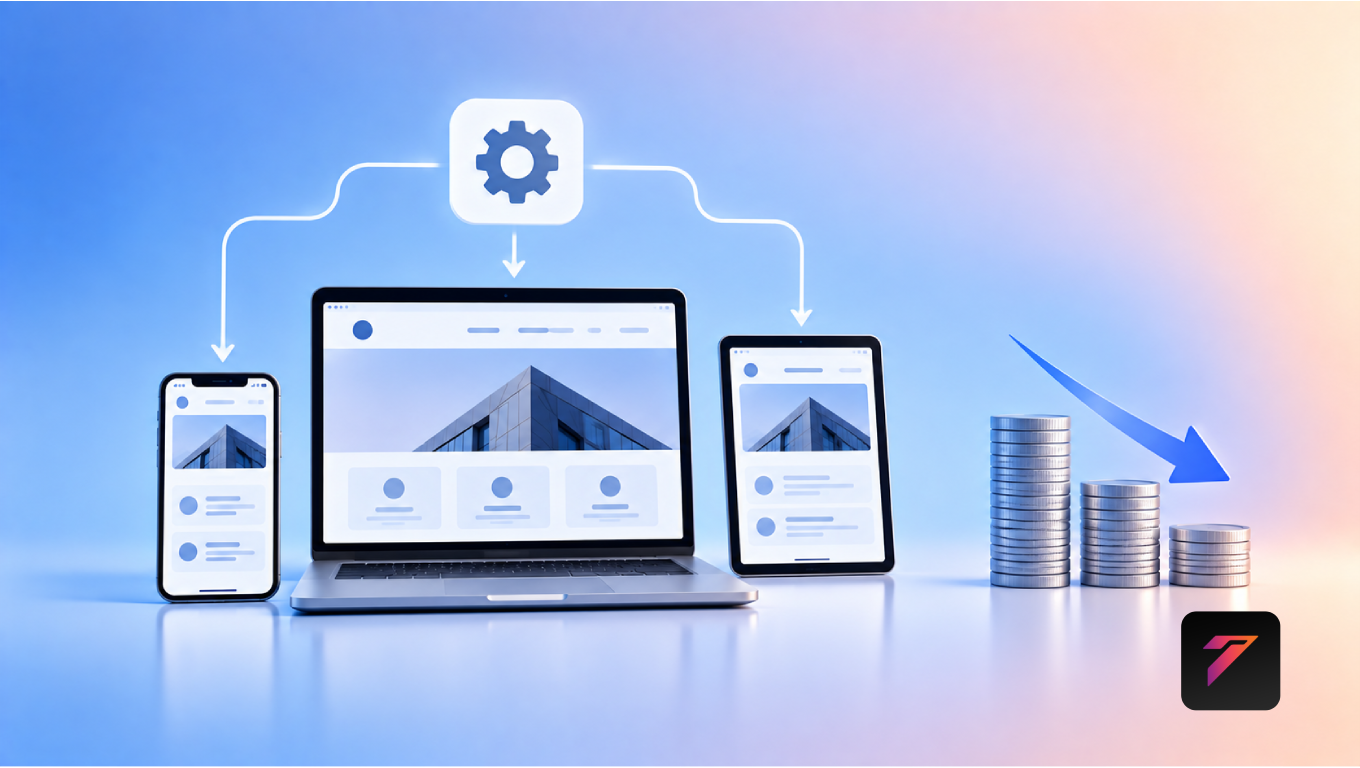
A progressive web approach can reduce duplication by allowing businesses to build a web-based application that serves multiple platforms.
1. One Codebase Can Serve Multiple Platforms
One of the most important cost advantages of progressive web technology is the ability to build a web application that can work across supported browsers and devices.
A business may otherwise consider:
Website + Android App + iOS App
A progressive web strategy can potentially provide:
Responsive Web Application + PWA Capabilities
This can reduce duplicated development work.
It does not eliminate the need for responsive testing or platform-specific considerations, but it can simplify the overall development structure.
2. Reduced Platform-Specific Development
Traditional native applications may require platform-specific development.
For example:
- Android development
- iOS development
- Web development
Each environment may involve different:
- Languages
- Frameworks
- APIs
- Testing requirements
- Release processes
A progressive web application is primarily built using web technologies.
Common technologies include:
- HTML
- CSS
- JavaScript
- Web APIs
- Service workers
- Web app manifests
This can reduce the amount of duplicated platform-specific development.
3. Simplified Maintenance
Software maintenance continues long after launch.
When a business maintains separate native applications, updates may need to be developed and tested across multiple platforms.
A progressive web application can allow businesses to update the web application centrally.
When users access the latest version through the web, businesses can deploy updates without relying exclusively on traditional app-store update cycles.
This can simplify:
- Bug fixes
- Feature updates
- Security improvements
- Content changes
- Performance improvements
The exact update behavior depends on the application’s caching and service-worker architecture.
4. Faster Deployment
Web applications can generally be deployed directly to web infrastructure.
Users can access the application through a URL without necessarily downloading an application package from an app store.
This can simplify the path between development and user access.
A business can:
- Develop the application.
- Test the application.
- Deploy it to a secure server.
- Publish the URL.
- Allow users to access it through supported browsers.
Installability can then provide an additional app-like experience where supported.
5. No Mandatory App Store Distribution
A major advantage of web applications is that users can access them directly through a browser.
This can reduce dependence on app-store distribution for the core web experience.
Businesses can share the application through:
- Website links
- Search engines
- Social media
- QR codes
- Digital advertising
This can make user acquisition simpler for certain business models.
6. Lower Distribution Friction
A user can discover a web application and start using it without necessarily installing a traditional application.
For example:
Search → Website → Web App → Install
This can shorten the path between discovery and usage.
For businesses where quick access is important, reducing installation friction may improve adoption.
7. Easier Cross-Device Access
Progressive web applications can be designed to work across multiple screen sizes.
Users may access the same experience from:
- Smartphones
- Tablets
- Laptops
- Desktop computers
Responsive design allows the interface to adapt to different screen dimensions.
This can reduce the need to design completely separate user interfaces for each device category.
8. Reduced Testing Duplication
Testing is an important part of development cost.
Separate native applications may require extensive platform-specific testing.
A progressive web application still requires comprehensive testing across:
- Browsers
- Operating systems
- Screen sizes
- Devices
- Network conditions
However, businesses can often centralize more of the application logic within the web stack.
This can reduce some duplicated testing effort.
9. Offline Capabilities
One of the important features of progressive web technology is the ability to support selected offline or poor-connectivity experiences.
Service workers can intercept network requests and provide cached resources when appropriate.
For example, a business application may allow users to:
- Open previously loaded content
- View cached information
- Access basic application screens
- Continue selected tasks
Offline functionality must be deliberately designed. A PWA does not automatically make every application fully offline-capable.
10. Better Experiences in Poor Network Conditions
Users may not always have reliable internet access.
Progressive web technologies can use caching strategies to improve the experience when connectivity is slow or temporarily unavailable.
For example:
Fast Network → Fresh Content
Slow Network → Cached Resources + Network Updates
Offline → Available Cached Experience
This can be particularly useful for users in areas with inconsistent connectivity.
11. Lower Infrastructure Complexity
A progressive web application can use existing web infrastructure.
Depending on the project, businesses may use:
- Cloud hosting
- CDNs
- Web servers
- Managed databases
- API services
- Existing web development infrastructure
This can reduce the need to maintain entirely separate application delivery systems.
Infrastructure requirements still depend on application architecture and expected traffic.
12. Easier Content and Feature Updates
Web-based applications can receive updates directly from the server.
Businesses can update:
- Content
- User interfaces
- Features
- APIs
- Business rules
Users can then receive the latest version through the web experience, subject to caching and deployment configuration.
This can reduce the operational overhead associated with coordinating multiple application releases.
13. Improved Reach
A traditional mobile application generally requires users to discover and install the app.
A web-based application can be discovered through:
- Search engines
- Links
- Social media
- Advertising
- QR codes
This creates an additional discovery channel.
For businesses that depend heavily on organic search or digital marketing, this can be especially useful.
14. SEO and Discoverability Benefits
Public-facing PWA content can potentially be discoverable through search engines when it is properly implemented.
Businesses can optimize public pages using:
- Descriptive titles
- Useful content
- Search-friendly URLs
- Structured data where appropriate
- Internal linking
- Performance optimization
- Mobile-friendly design
However, private application dashboards behind authentication are generally not intended to be indexed.
Businesses should distinguish between public marketing content and private application functionality.
15. Lower User Acquisition Costs in Some Cases
A PWA can reduce some barriers between marketing and product usage.
For example:
Search Result → Landing Page → Product Experience
Instead of:
Search Result → App Store → Download → Installation → Registration → Product
The shorter journey can make it easier for some users to try the service.
Actual acquisition costs still depend on the product, marketing strategy, competition, and user behavior.
16. Easier Integration With Existing Websites
Businesses do not necessarily need to replace their existing website.
A progressive web application can be integrated into an existing digital ecosystem.
For example:
Corporate Website
↓
Product Pages
↓
Customer Portal / PWA
↓
CRM / ERP / API
This approach allows businesses to gradually introduce application functionality.
17. Reduced Development Duplication
Consider a business that wants:
- A responsive website
- Android application
- iOS application
- Customer portal
Developing completely separate experiences can result in duplicated:
- UI work
- Business logic
- Testing
- Maintenance
- Documentation
A progressive web strategy can centralize much of the experience in one web application.
This can reduce duplication when the required functionality is well suited to the web platform.
18. Easier Continuous Improvement
Because web applications can be updated centrally, businesses can continuously improve the product.
Teams can release:
- UI improvements
- Performance enhancements
- New features
- Bug fixes
- Security updates
This supports an iterative development model.
Instead of waiting for a large release cycle, teams can make smaller improvements over time.
19. Reduced Dependency on Device Storage
Traditional applications generally require installation and local storage.
A PWA can provide application-like functionality while remaining primarily web-based.
This can be useful for users who prefer not to install large applications.
However, PWAs can also use local storage and browser storage where appropriate.
20. Easier Sharing and Marketing
A web URL is easy to share.
Businesses can promote their progressive web experience through:
- Email campaigns
- Social media
- Search engines
- QR codes
- Digital advertisements
- SMS
- Website links
Users can open the same URL on supported devices.
This can simplify promotional campaigns.
Progressive Web Technology and E-Commerce
E-commerce businesses can use PWA approaches to improve shopping experiences.
Possible features include:
- Product browsing
- Search
- Shopping carts
- User accounts
- Order tracking
- Notifications
- Cached content
- Installability
A progressive web approach can be particularly useful for businesses that want an app-like shopping experience without immediately developing separate native applications.
Progressive Web Technology for Customer Portals
Customer portals can benefit from web application functionality.
Users may be able to:
- View account information
- Track orders
- Download documents
- Submit requests
- Check project status
- Communicate with support
A PWA can provide convenient access while maintaining a web-based architecture.
Progressive Web Technology for Business Applications
Internal business tools can also use PWA approaches.
Examples include:
- Employee portals
- Inventory systems
- Field service applications
- Sales dashboards
- Project management tools
- Reporting platforms
For field employees who work across different locations, responsive and connectivity-aware web applications can be useful.
Progressive Web Technology and Business Automation
A PWA can act as the user interface for automated business processes.
For example:
Customer Request → PWA → API → CRM → Notification
Or:
Employee Request → PWA → Approval Workflow → Manager → ERP
This allows businesses to combine progressive web interfaces with existing backend systems.
Progressive Web Technology and APIs
APIs are important for modern web applications.
A PWA can communicate with backend services through APIs to retrieve or submit data.
For example:
PWA → Authentication API → CRM API → Payment API → Analytics
This architecture can allow businesses to reuse existing backend services.
It can also make the front-end experience more flexible.
Progressive Web Technology and Security
Security remains essential.
Businesses should consider:
- HTTPS
- Secure authentication
- Authorization
- Input validation
- Secure API communication
- Session management
- Data protection
- Secure service-worker implementation
- Dependency management
PWAs should be developed using secure web development practices.
The OWASP Application Security Verification Standard provides useful guidance for web application security requirements.
Progressive Web Technology and Performance
Performance is important because users may access PWAs from mobile devices and variable network conditions.
Businesses can improve performance through:
- Code optimization
- Image compression
- Lazy loading
- Browser caching
- Efficient API requests
- CDN delivery
- Minification
- Resource prioritization
Tools such as Google PageSpeed Insights can help evaluate web performance.
Is Progressive Web Technology Suitable for Every Business?
No.
A PWA may not be the right solution when an application requires extensive platform-specific functionality.
Businesses should evaluate:
- Device APIs
- Hardware requirements
- Offline requirements
- Performance requirements
- Distribution strategy
- User expectations
- Security needs
- Platform-specific features
Some applications may benefit more from native development or a hybrid architecture.
When Progressive Web Technology Makes Sense
A PWA approach may be suitable when:
- The application needs broad web access.
- Users need fast onboarding.
- Cross-platform access is important.
- SEO and discoverability matter.
- App-store distribution is not essential.
- The product needs regular updates.
- The application can operate effectively with web APIs.
- Development resources need to be used efficiently.
When Native Apps May Be More Appropriate
Native development may be more appropriate when an application depends heavily on platform-specific capabilities.
Examples may include applications requiring:
- Advanced Bluetooth functionality
- Specialized hardware integration
- Extensive background processing
- Platform-specific APIs
- High-performance graphics
- Deep operating-system integration
The choice should be based on technical requirements rather than development cost alone.
Progressive Web Technology vs Native Apps
| Progressive Web Technology | Native Applications |
|---|---|
| Web-based | Platform-specific |
| Accessible through URLs | Installed through app distribution channels |
| One web codebase can serve multiple platforms | Usually separate platform development |
| Easier web discoverability | Strong platform integration |
| Centralized deployment | Platform-specific releases |
| Can support installability | Full native installation |
| Uses web APIs | Uses platform APIs |
| May have platform capability limitations | Broad device capability access |
The appropriate option depends on the product’s requirements.
Progressive Web Technology vs Traditional Website
A traditional website may be enough for businesses that primarily need information and lead generation.
A PWA becomes more relevant when users need application-like functionality.
Traditional Website
- Content
- Services
- Blog
- Contact forms
- Product information
PWA
- User accounts
- Interactive dashboards
- Offline experiences
- Notifications
- Installability
- Dynamic data
- Application workflows
Cost Factors to Consider
The cost of a progressive web project depends on:
- Design complexity
- Application functionality
- Backend development
- API integrations
- Database requirements
- Authentication
- Offline capabilities
- Testing
- Hosting
- Maintenance
- Security
A PWA can reduce duplicated development work, but it is still a software application and requires proper planning and engineering.
How to Reduce Development Costs With a PWA Strategy
Businesses can follow these steps:
1. Define the Core Product
Identify the features users actually need.
2. Build an MVP
Start with essential functionality.
3. Reuse Existing APIs
Connect to existing backend systems where practical.
4. Use Responsive Design
Create a flexible interface for multiple screen sizes.
5. Implement PWA Features Selectively
Add offline support, installability, notifications, and other capabilities only where they provide value.
6. Test Across Target Devices
Identify the browsers and devices that matter most to users.
7. Monitor Performance
Track loading speed, errors, and user behavior.
8. Improve Iteratively
Release features in manageable stages instead of attempting to build everything at once.
Common Mistakes to Avoid
Treating a PWA as Automatically Cheaper
Development costs depend on scope and complexity.
Adding Unnecessary Features
Not every project needs offline functionality, push notifications, or installation.
Ignoring Browser Compatibility
Web capabilities vary across browsers and platforms.
Poor Offline Design
Offline functionality should be designed around realistic user scenarios.
Weak Security
Application data and APIs must be properly protected.
Ignoring Performance
Large JavaScript bundles and inefficient APIs can make a PWA slow.
Failing to Test Real Devices
Desktop testing alone is not enough for mobile-focused experiences.
Conclusion
Progressive web technology can help businesses reduce development duplication by providing a web-based application experience across multiple supported devices.
Instead of immediately creating separate native applications for different platforms, businesses can use a PWA approach to combine responsive web development with capabilities such as installability, caching, offline experiences, and application-like interactions.
The potential cost benefits come from factors such as a shared web codebase, centralized deployment, easier updates, broader access, and reduced platform-specific development.
However, a PWA is not automatically the cheapest or best solution for every project. Businesses should evaluate functionality, device capabilities, security, performance, user expectations, browser support, and long-term maintenance before selecting an architecture.
When the requirements align with the strengths of the web platform, progressive web technology can provide a flexible way to build modern digital experiences while managing development and maintenance resources.
Frequently Asked Questions
1. What is progressive web technology?
Progressive web technology uses modern web capabilities to create fast, responsive, installable, and application-like web experiences that can work across supported browsers and devices.
2. Can progressive web technology reduce development costs?
It can reduce development duplication when one web application can serve multiple supported platforms instead of requiring completely separate native applications. Actual savings depend on project scope and technical requirements.
3. Are Progressive Web Apps cheaper than native apps?
They can require less duplicated development when the required functionality is well suited to web technologies. However, complex PWAs can still require significant design, development, testing, security, and maintenance investment
4. Can Progressive Web Apps work offline?
Yes, PWAs can support selected offline functionality through technologies such as service workers and caching. The available offline experience depends on how the application is designed.
5. Is progressive web technology suitable for every business?
No. Businesses requiring extensive platform-specific hardware access, specialized device capabilities, or deep operating-system integration may need native or hybrid application development instead.
Ready to Build a Professional Website for Your Business?
Turn your business into a powerful online brand with Hashseven.
Since 2017, we’ve helped businesses grow through professional website development, mobile apps, custom software, SEO, digital marketing, CRM, POS solutions, and Meta-approved WhatsApp automation. Let’s create a fast, secure, and conversion-focused website that attracts more customers and drives real business growth.